
Centralized Ordering Hub & Call Centre for Restaurants in Nepal
Restronp Team · · Estimated reading time: 10 min read
Centralized order management for Nepali restaurants, cafes, and food outlets—align phone, app, and walk-in orders with KOT management, real-time kitchen updates, POS billing, and faster service.
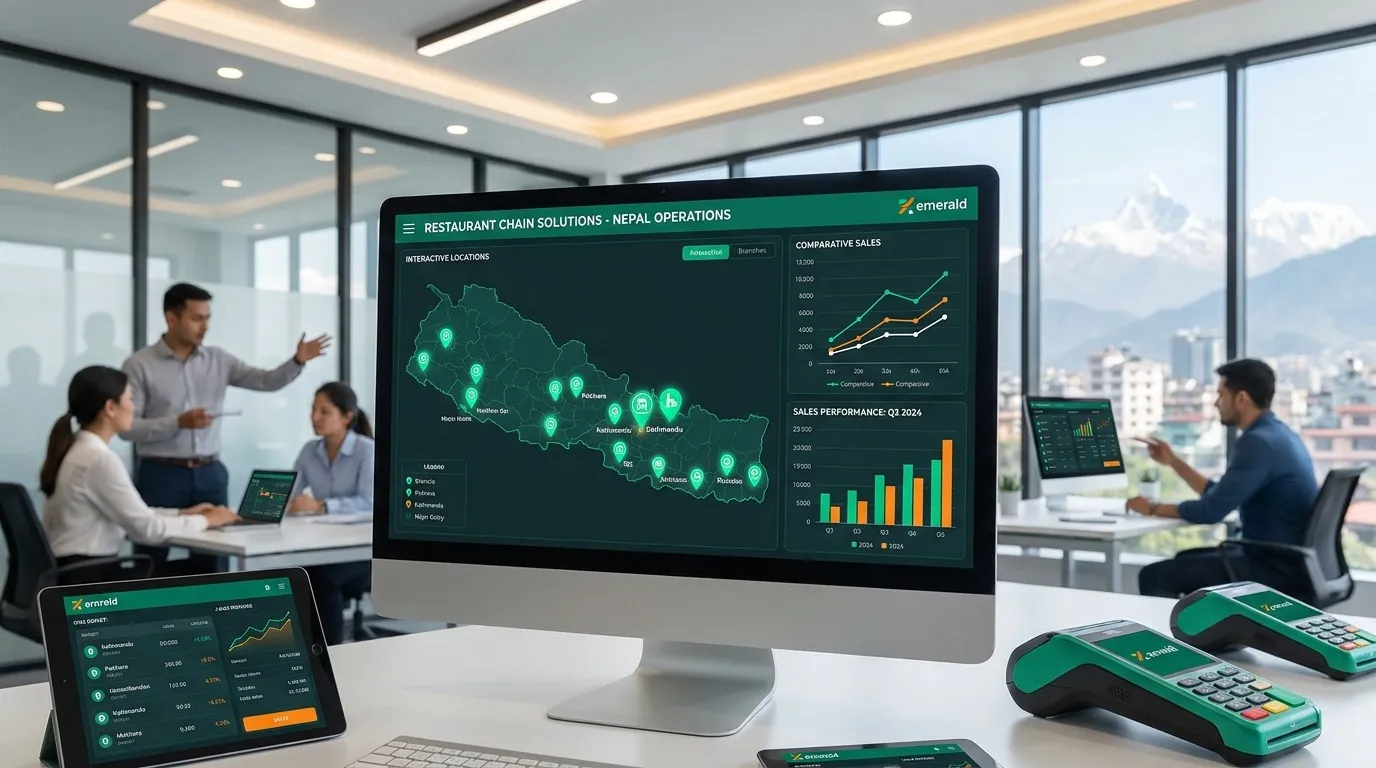
Why one ordering hub beats scattered channels
When orders arrive by phone, WhatsApp, delivery apps, and walk-ins—and each channel lives in its own notebook, spreadsheet, or chat—you get duplicates, missed modifiers, and receipts that never match what the kitchen cooked. That is rarely a staffing failure; it is usually a systems failure. A centralized ordering hub gives your team one place to confirm orders, prioritize them fairly, and push them into the same workflow your kitchen, KOT, and restaurant POS already use.
For restaurants in Kathmandu, Pokhara, and towns across Nepal, peaks already stretch crews thin. Call-centre style coordination—whether you literally run a desk or one senior person answering phones—only scales when it connects to real restaurant management software, not sticky notes beside the cashier.
What breaks when intake is fragmented
- Double firings: the kitchen prints twice because WhatsApp and phone both placed the same curry.
- Late prep starts: delivery pickups slip because nobody timestamped acceptance into the POS.
- Invoice mismatch: the bill was edited manually while the ticket on the rail still shows the original portion size.
- Settlement pain: reconciling cash, wallets, platforms, and bank transfers to tickets takes hours after midnight.
Unifying intake fixes the handoff so billing software, taxes, and guest-facing receipts stay tied to the ticket that produced the food.
A Nepal-friendly call workflow (without a multinational call floor)
You need clear ownership: who confirms the guest and phone number, who captures modifiers and allergies, who commits the order for kitchen time, and who handles payment or rider instructions. Scripts can stay short—Nepali or English per guest—but the steps must be repeatable so Saturday’s backup shift runs the same flow as Tuesday’s opener.
For delivery, confirm landmarks and gate details; for festivals and bandhs, buffer rider ETAs honestly so your brand does not promise what traffic cannot deliver.
Order management, effective orders, and real-time updates
Strong order management means every accepted ticket has a status someone owns: confirmed, in prep, ready, out for delivery. That visibility—real-time updates on the pass and at the cashier—reduces shouting across the room and helps you promise honest ETAs. Whether you run a compact cafe or a multi-floor dining room, “effective orders” are the ones that flow once, print once, and settle once.
Many teams also pair confirmations with bulk SMS or messaging for delivery OTPs and pickup windows—useful when guests step away from the phone. A cloud-based hub lets owners spot bottlenecks from off-site without waiting for closing screenshots.
Dine-in, takeaway, delivery, and reservations on one rhythm
Guests rarely care which channel stressed your kitchen—they care that food, timing, and bills match. Routing dine-in, takeaway, rider delivery, and light reservation management through one intake model keeps KOT, cashiers, and runners aligned. Clear order status—whether on a bump screen or a token-style queue—reduces crowding at the pass during festivals and Friday peaks.
Connecting the hub to POS, invoices, and the kitchen
Every accepted order should inherit menu rules—tax, service charge, discounts—and flow to KOT without retyping. That is how POS and invoice software stay aligned with what guests actually consumed. Linking intake to your restaurant POS in Nepal matters because VAT lines and totals should reflect one truth, especially when auditors, partners, or sharp-eyed regulars compare receipts.
If you record inventory against recipes, centralized intake also surfaces demand earlier—before the shift sells out key ingredients unexpectedly.
Where Restronp fits
Restronp treats orders, tables, staff, payments, inventory, POS and KOT as one platform—so phone and delivery channels do not live outside the stack your accountant and chef already trust.
Next steps
Walk through connected order flows on our features page, compare pricing, or contact Restronp for a demo aligned with your channels.
More blogs
Sweet Shop POS in Nepal: Mithai Counters, Festivals & Pre-Orders
Restronp guide: sweet shop & mithai Nepal—restaurant billing software Nepal, fast billing restaurant Nepal, free inventory management software Nepal signals, billing invoice restaurant Nepal, pre-orders & festival peaks.
Restaurant POS Software for Fine & Casual Dining in Nepal
Restronp SEO guide: fine & casual dining in Nepal—restaurant POS software Nepal, reservation management software Nepal, table and space management Nepal, billing invoice restaurant Nepal, KOT/BOT, dine-in takeaway delivery Nepal POS.
Pizza Restaurant POS in Nepal: Modifiers, Halves & Kitchen Timing
Restronp guide: pizza Nepal—restaurant POS software Nepal, kitchen order ticket tracking Nepal, dine-in takeaway delivery Nepal POS, fast billing restaurant Nepal, modifiers & KOT.
Multiple Restaurant Outlets in Nepal: One System, Less Chaos
Managing several outlets in Nepal—central menus, branch roles, stock visibility, and reports that compare Kathmandu, Pokhara, or highway towns without opening five spreadsheets.