
Restaurant Menu Display System (MDS) in Nepal: Guest Screens, Digital Boards & POS-Synced Menus
Restronp Team · · Estimated reading time: 9 min read
Menu display system (MDS) for Nepal restaurants—digital menu boards and guest-facing screens synced with POS, NPR pricing, modifiers, and KOT so diners see what your kitchen can actually fulfil.
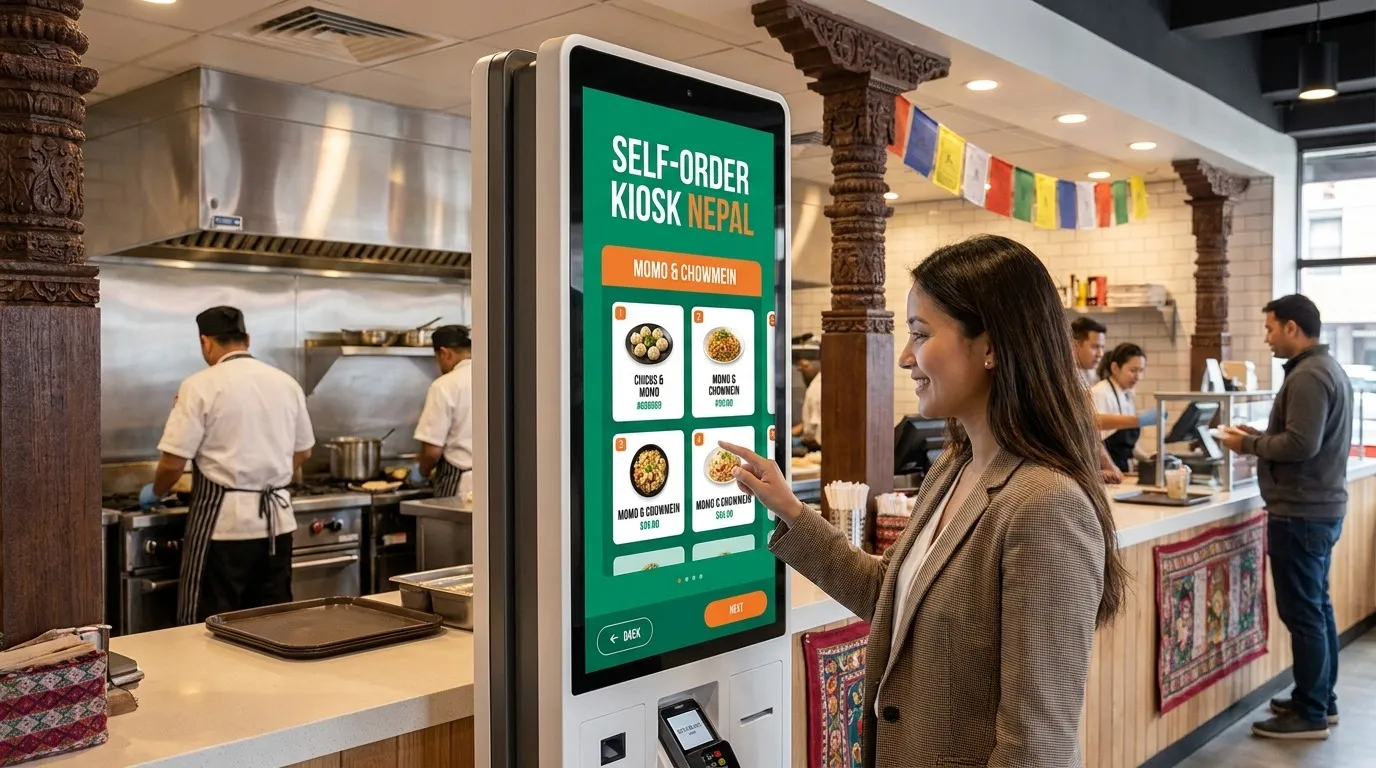
What a menu display system actually does
A menu display system keeps guest-facing menus accurate on TVs, tablets, or exterior boards—priced in NPR, aligned with service charge and tax expectations, and fed from the same catalogue your restaurant POS software rings at the till. When specials change mid-shift or you 86 an item during peak hours, screens should update without someone editing three different files.
For outlets in Kathmandu, Lalitpur, Pokhara, and highway towns, tourism and festival peaks reward menus that look sharp but stay truthful to what KOT management can produce.
Guest screens versus printed boards
Printed inserts age fast when suppliers move prices weekly. Digital menu boards reduce reprint costs and support bilingual Nepali–English layouts where guests need clarity on spice levels or allergens—especially when QR-led ordering sits beside counter service.
Sync with POS, QR menus, and delivery listings
The classic failure mode is drift: the wall shows yesterday’s momo price while the cashier rings today’s POS total. Strong setups tie menu management to one source so dine-in displays, QR code ordering, and counter POS inherit identical items and modifiers.
Where kitchen coordination matters
Even “front of house” displays shape expectations for prep times. Pairing accurate menus with transparent order status—whether via tokens or KDS-style rhythm—reduces disputes when guests ordered from a board that promised something the pass cannot fire yet.
Choosing MDS-style workflows for Nepal restaurants
Teams often evaluate brightness for daylight windows, offline resilience when connectivity flickers, and roles so junior staff cannot accidentally publish draft prices. Owners comparing hardware should still anchor software choices on integration with restaurant POS in Nepal first—screens are only as honest as the catalogue behind them.
Where Restronp fits
Restronp treats menus, orders, tables, payments, and KOT as one stack—so Nepal operators can extend consistent catalogue data across POS, QR, and operational reporting instead of rebuilding menus per channel.
Related guides
Explore kitchen display systems (KDS), features, pricing, or contact Restronp for a demo.
More blogs
Cafe POS Software in Nepal: Tabs, Modifiers & Busy Counters
Restronp guide: cafe POS software Nepal—easy restaurant software Nepal, menu management Nepal restaurant, fast billing restaurant Nepal, free QR code menu software Nepal, real-time sales report Nepal, digital wallet POS Nepal.
Simple Accounting & Expense Management for Nepali Restaurants
Practical accounting and expense management for Nepal restaurants—daily cash discipline, VAT-aware billing, purchase logs, and lighter month-end work with your CA.
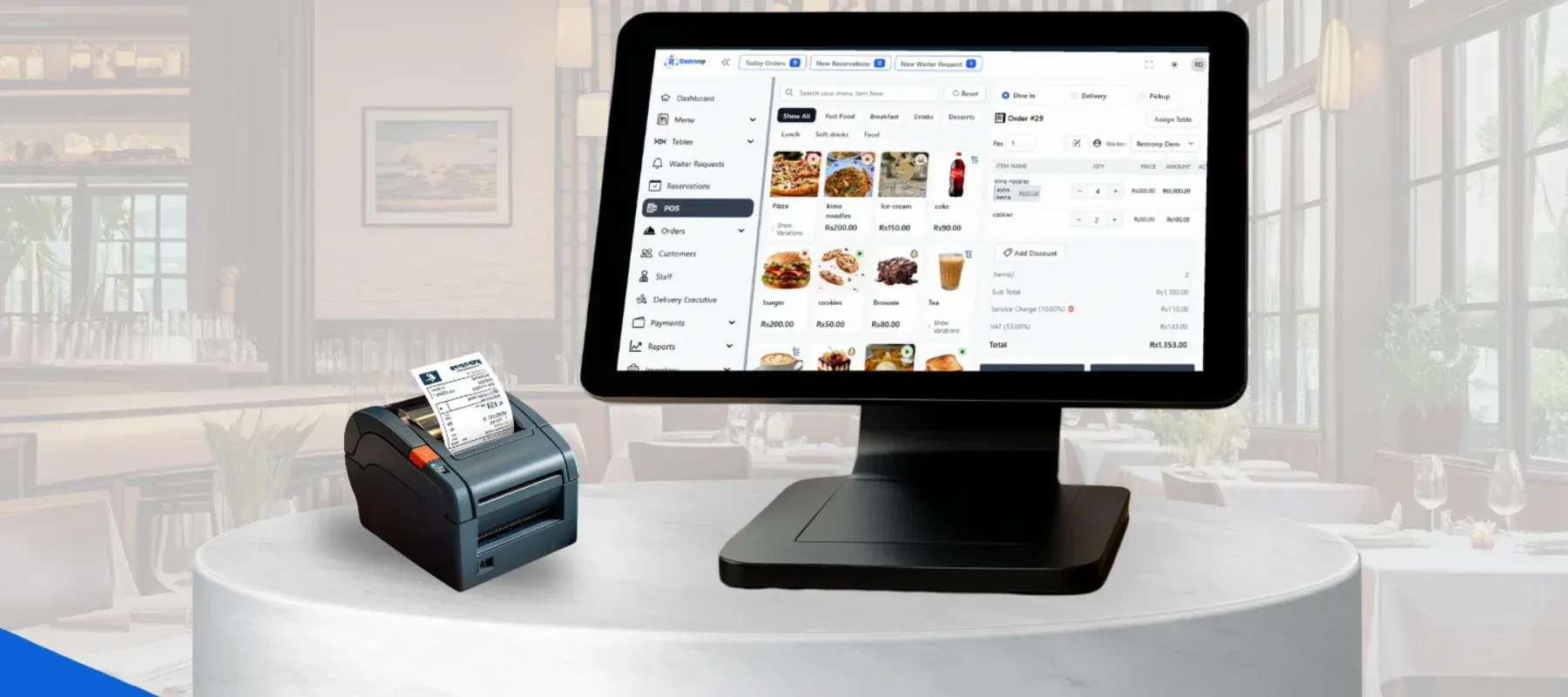
Why Nepali Restaurants Need Free POS Systems Like Restronp in 2025
Discover why Nepali restaurants in 2025 should switch to free POS systems like Restronp to simplify billing, track inventory, manage staff, and boost customer loyalty.
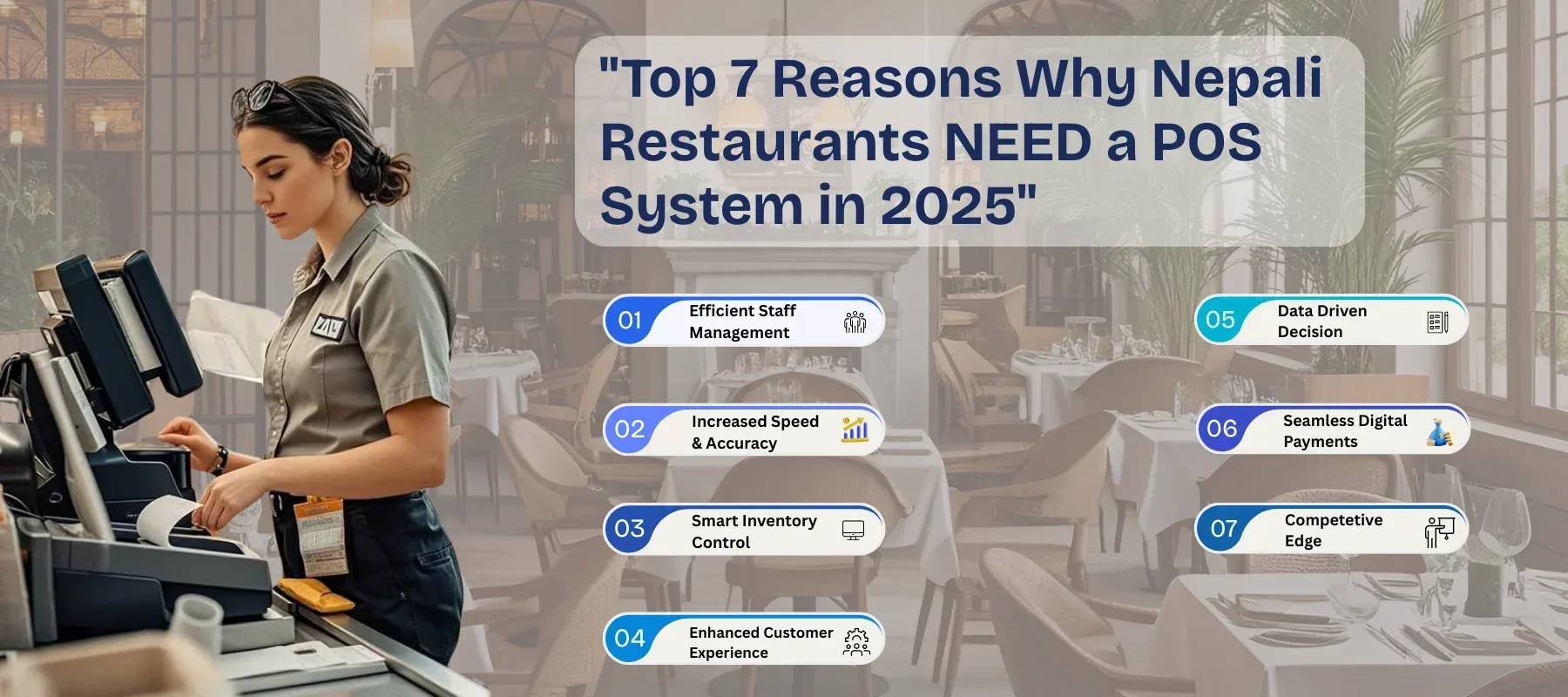
Top 7 Reasons Why Nepali Restaurants Need a POS System in 2025
Top 7 Reasons Why Nepali Restaurants Need a POS System in 2025